June is not just the middle of the year. It is a checkpoint. And for home care and healthcare agency owners, that checkpoint matters more than ever. The U.S. Bureau of Labor Statistics projects home health and personal care aide employment to grow 17% from 2024 to 2034, with about 765,800 openings each year on average. At the same time, industry reports continue to show caregiver turnover and recruiting pressure as major challenges for agencies. Add in declining employee engagement and growing leadership strain, and the message is clear: the second half of the year will not reward agencies that are still operating in survival mode.

This is why mid-year is the right time to ask a serious question:
Can your current support system carry the business you are trying to build?
For many agency owners, the first half of the year is spent reacting. Recruiting needs pile up. Scheduling gaps become normal. After-hours calls interrupt personal time. Client inquiries need faster responses. Caregiver communication becomes inconsistent. The owner becomes the final answer to every question, every issue, and every decision.
By June, those patterns are no longer random.
They are signals.
They show where the business is overdependent, understaffed, unclear, or operating without enough structure.
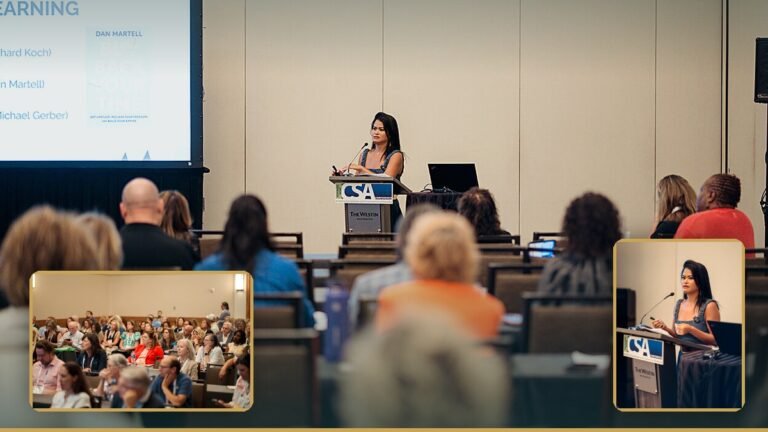
At Ascension Business Solutions, CEO Regina Asuncion often reminds agency owners that growth does not only depend on having more clients, more caregivers, or more opportunities. Growth depends on whether the agency has the operational support to carry the weight behind the scenes.
Because an agency can be growing on paper while quietly exhausting the people holding it together.
Mid-Year Is the Best Time to Pause Before the Pressure Builds
The middle of the year gives owners something valuable: visibility.
By June, you can already see what is working and what is not. You know which processes are still too manual. You know which roles are overwhelmed. You know where communication keeps breaking down. You know which tasks keep getting delayed because everyone is too busy putting out fires.
The problem is that many owners keep pushing forward without stopping to rebuild the structure underneath the business.
They tell themselves:
“We will fix it once things slow down.”
But in home care and healthcare, things rarely slow down on their own.
The second half of the year often brings its own pressure: summer coverage issues, PTO requests, back-to-school scheduling changes, holiday planning, caregiver availability shifts, Q4 goals, and year-end growth targets.
If the first half of the year already felt heavy, the second half will not magically become easier without stronger support.
That is why June should not only be treated as a reporting month.
It should be treated as an operational audit month.
Start by Asking: What Is Still Too Dependent on You?
One of the most important questions an agency owner can ask is:
What still stops when I am not available?
If scheduling escalations always need you, that is a sign.
If recruiting follow-ups slow down when you are pulled into meetings, that is a sign.
If client emails sit unanswered because your internal team is stretched, that is a sign.
If your office team cannot fully disconnect after hours because someone always needs to monitor urgent communication, that is a sign.
If every decision still needs your approval, your agency may not have a people problem. It may have a support system problem.
Regina’s perspective is simple: owners should not confuse being involved with being operationally trapped.
Strong leadership requires visibility, direction, and accountability. But it should not require the owner to personally carry every task, every follow-up, and every gap.
When too much depends on one person, growth becomes fragile.
Audit Where Communication Breaks Down
Communication is one of the biggest hidden stress points inside a home care agency.
It affects caregivers, clients, office staff, families, and leadership. When communication is delayed or unclear, the consequences show up quickly.
A caregiver does not receive a timely update.
A shift change is missed.
A family waits too long for a response.
A candidate loses interest because no one followed up fast enough.
A client concern gets escalated too late.
A manager spends the day repeating information across calls, texts, emails, and scheduling platforms.
These breakdowns may look small in the moment, but over time they create distrust, frustration, and rework.
Mid-year is the right time to review:
-
- Are calls, texts, and emails being handled quickly enough?
-
- Are urgent concerns being escalated properly?
-
- Are client and caregiver updates documented clearly?
-
- Are handoffs happening consistently?
-
- Are after-hours concerns creating next-day chaos?
-
- Are the right people assigned to monitor communication channels?
If communication depends on whoever “has time,” the system will eventually fail.
Agencies need assigned ownership, clear response expectations, and trained support that understands the urgency of healthcare operations.
Look at the Tasks That Keep Getting Delayed
Every agency has a list of tasks that keeps getting pushed to the next day.
Applicant follow-ups.
Reference checks.
Caregiver onboarding documents.
Shift confirmations.
Referral tracking.
CRM updates.
Billing support.
Client check-ins.
Social media updates.
EOD reports.
Administrative cleanup.
These tasks may not always feel urgent, but they are often the tasks that protect consistency.
When they are delayed long enough, they become bigger problems.
A missed applicant follow-up becomes a lost caregiver.
A delayed client response becomes frustration.
An incomplete onboarding task becomes confusion.
A neglected CRM becomes a weak sales pipeline.
A late report becomes a leadership blind spot.
Mid-year is the perfect time to stop accepting delayed work as “normal” and ask:
What work needs a stronger owner behind it?
This is where the right support changes the way an agency operates. Not because every task is complicated, but because consistency requires capacity.
Review Your Recruiting Pressure Before It Turns Into Panic
Recruiting in home care is not something agencies can afford to treat as an emergency-only function.
When recruiting becomes reactive, everything else becomes reactive too.
Caregiver shortages affect scheduling.
Scheduling pressure affects client satisfaction.
Client dissatisfaction affects retention.
Internal stress affects leadership.
Leadership strain affects the entire team.
By June, agency owners should review whether their recruiting support is strong enough for the second half of the year.
Ask:
-
- Are candidates being followed up with quickly?
-
- Are interview reminders consistent?
-
- Are no-shows being tracked?
-
- Are qualified applicants moving through the pipeline efficiently?
-
- Are job postings being monitored and refreshed?
-
- Are hiring updates documented clearly?
-
- Is someone owning the details every day?
Recruiting is not just about finding people. It is about protecting momentum.
When follow-up is slow or inconsistent, the agency loses candidates before the interview even happens.
Scheduling Support Needs More Than Good Intentions
Scheduling is one of the most emotionally and operationally intense parts of home care.
It affects care continuity, caregiver satisfaction, client trust, and office team stress.
When scheduling support is weak, owners feel it immediately.
The team becomes stuck in a constant loop of call-outs, last-minute changes, open shifts, caregiver availability updates, and family concerns. And when there is not enough structure, the scheduler becomes overwhelmed, caregivers become frustrated, and the owner gets pulled back into daily operations.
Mid-year is the time to assess:
-
- Are call-outs being handled quickly?
-
- Are open shifts being tracked clearly?
-
- Are caregivers being contacted consistently?
-
- Are schedule changes being documented properly?
-
- Are patterns being reviewed, or only handled one by one?
-
- Does the scheduler have enough support during high-pressure times?
-
- Is after-hours coverage protecting the next business day?
A strong scheduling system is not just about filling shifts.
It is about creating stability.
Protect Leadership Workload Before Burnout Becomes the Culture
Many agency owners normalize exhaustion.
They tell themselves it is just part of growth.
But burnout is not a growth strategy.
When the owner is constantly pulled into recruiting, scheduling, intake, after-hours communication, admin work, and client follow-ups, leadership time disappears. Instead of building the business, the owner becomes trapped inside the daily workload.
That is dangerous because the agency still needs strategic leadership.
It needs someone thinking about growth, partnerships, client experience, caregiver retention, service quality, team development, and financial direction.
If the owner is too buried to lead, the business may keep moving, but it will not move with clarity.
This is where Regina’s operational philosophy becomes important:
The goal is not to remove the owner from the business. The goal is to remove the owner from the wrong level of the business.
Owners should lead the direction, not carry every detail.
Where ABS Fits Into the Mid-Year Rebuild
Ascension Business Solutions helps home care and healthcare agencies create more operational capacity before burnout, inconsistency, or missed opportunities become bigger problems.
ABS is not simply about adding another person to the team.
It is about helping agencies build stronger support around the work that keeps the business moving.
That may include:
-
- Recruiting support
-
- Scheduling coordination
-
- Intake support
-
- After-hours and weekend coverage
-
- Virtual receptionist support
-
- Administrative support
-
- Executive assistance
-
- Data migration and documentation support
-
- Back-office operations
The purpose is not just to “delegate tasks.”
The purpose is to help owners move from reactive operations to structured growth.
When the right support is in place, the owner is not the only person holding the system together. The internal team has more breathing room. Communication becomes more consistent. Recruiting becomes less reactive. Scheduling becomes more supported. Follow-ups stop falling through the cracks.
That is how agencies create capacity before the pressure becomes too expensive.
A Simple Mid-Year Support System Audit
Before the month ends, agency owners should take time to answer these questions honestly:
1. What work still depends too heavily on me?
Look at the tasks, decisions, and follow-ups that stop when you are unavailable.
2. Where is communication breaking down?
Review response times, handoffs, documentation, after-hours concerns, and recurring complaints.
3. What tasks keep getting delayed?
Identify the admin, recruiting, scheduling, intake, and reporting tasks that never seem to stay current.
4. Which roles are overwhelmed?
Look at your scheduler, recruiter, office manager, intake coordinator, and leadership team. Who is carrying too much?
5. Where are we reacting instead of planning?
Find the areas where your agency only acts when something becomes urgent.
6. What support do we need before the second half gets heavier?
Do not wait for burnout to prove the gap. Build support while there is still time to strengthen the system.
Final Thought: June Is the Checkpoint, Not the Finish Line
June gives agency owners a rare opportunity to pause, look honestly at the first half of the year, and make better decisions before the next wave of pressure arrives.
The question is not only whether your agency can grow.
The better question is:
Can your current support system sustain that growth without burning out your team, delaying important work, or pulling you back into every detail?
Use this month to look honestly at your operations.
The second half of the year will require the right people, the right systems, and the right support.
And if your agency is ready to build more capacity, protect leadership time, and strengthen the operational foundation behind your growth, Ascension Business Solutions is here to help you do it with structure, care, and excellence.
Let’s Continue the conversation